How Sitting Affects Your Lower Back
Poor Sitting Posture
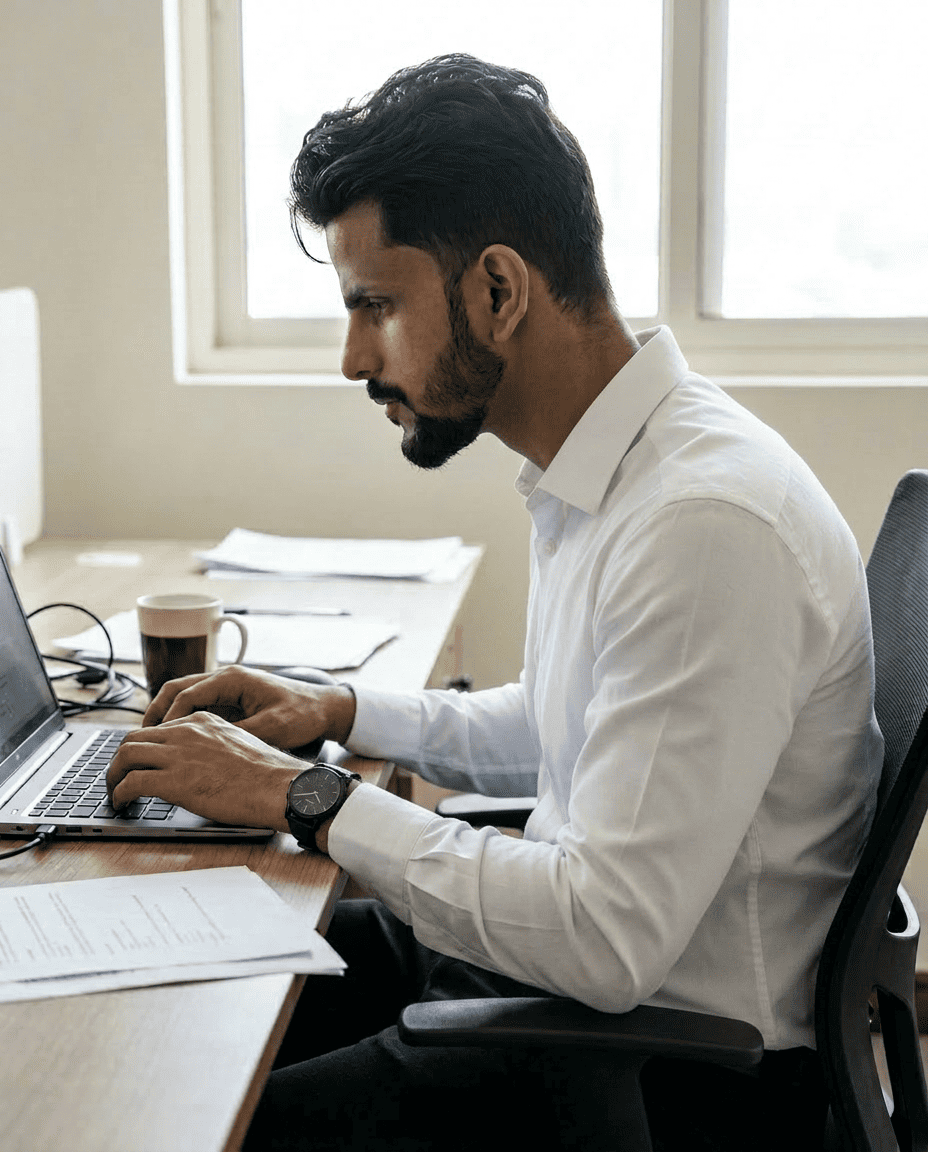
Slouching or sitting with poor posture may increase pressure on the lower back and surrounding muscles. Over time, this can contribute to discomfort and is commonly associated with lower back pain.
Sitting for Long Periods
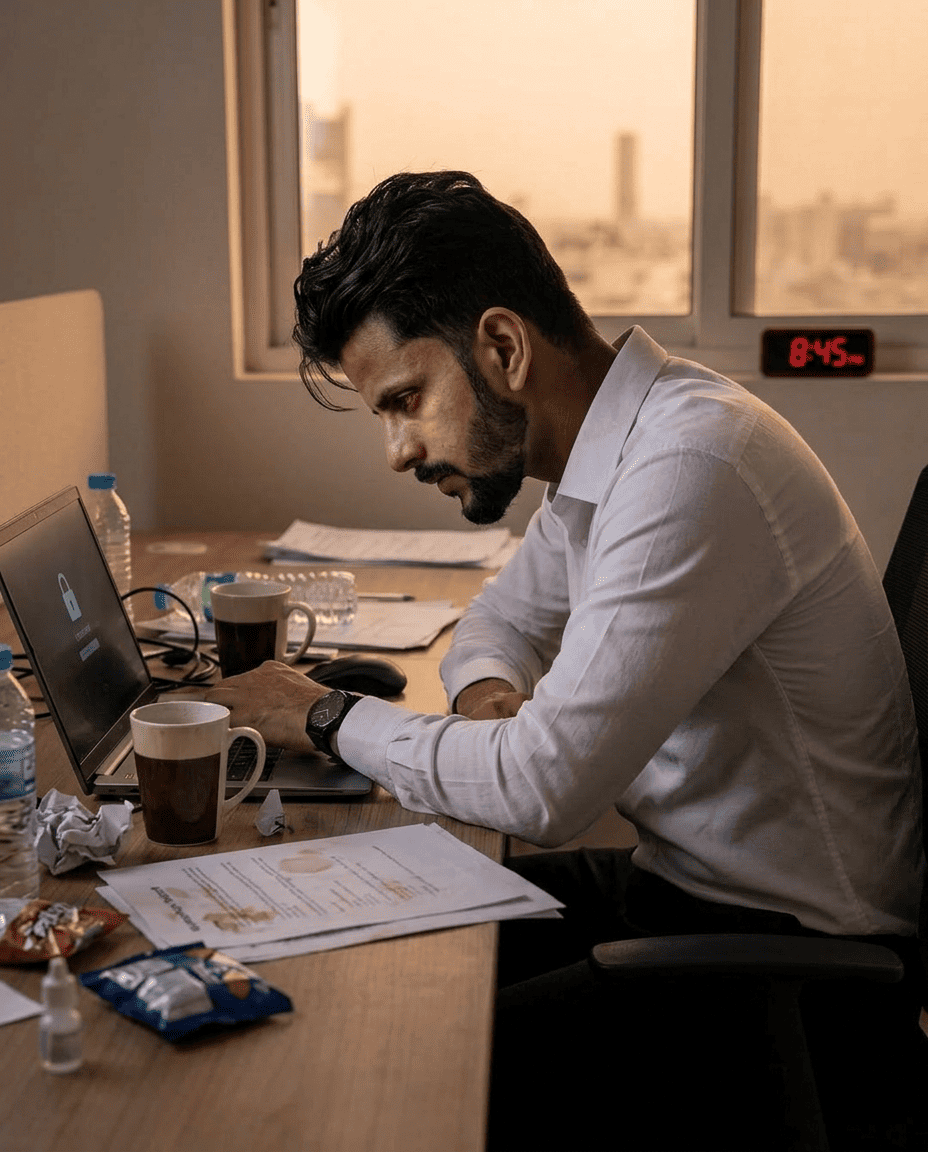
Spending long periods sitting without regular movement may lead to muscle stiffness and increased pressure on the lower back.
Tight Hip Flexor Muscles
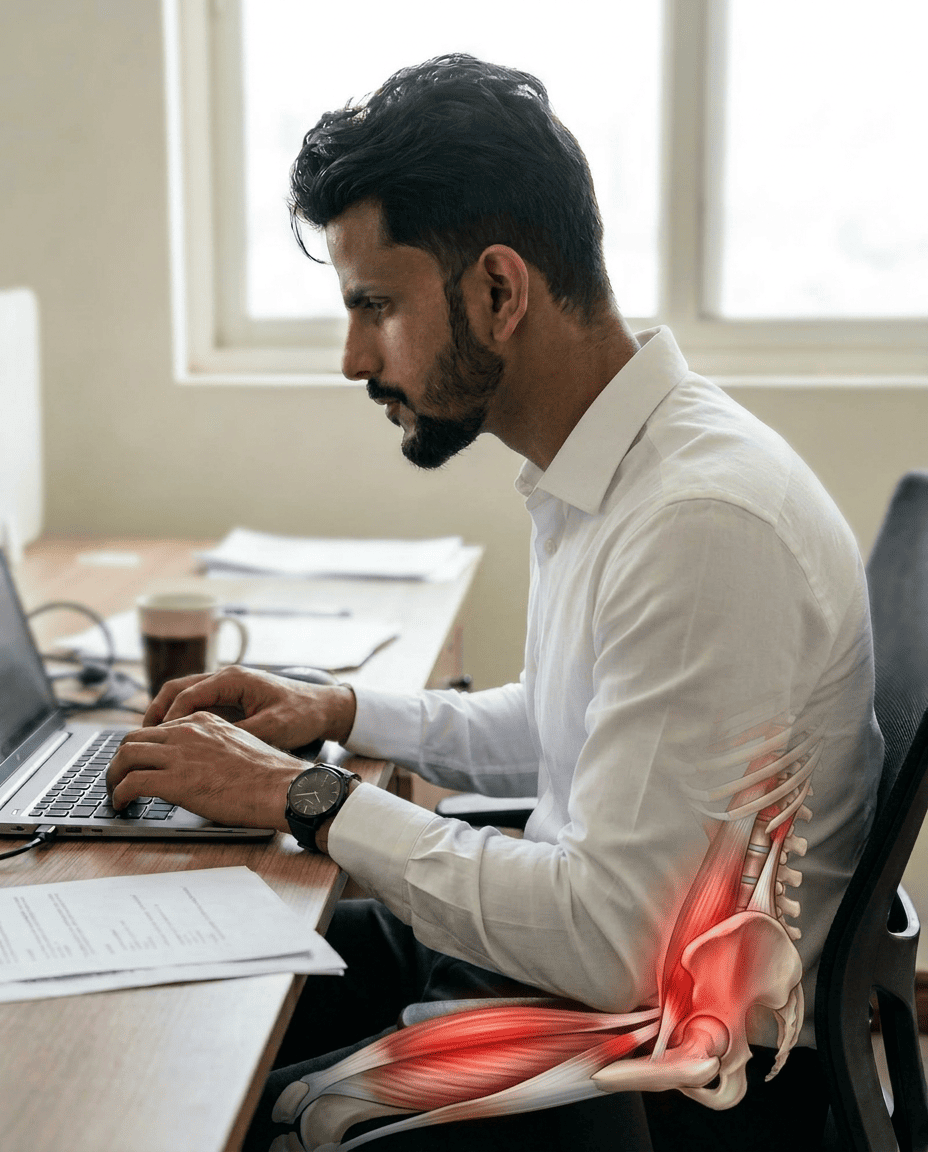
Extended sitting is commonly associated with tighter hip flexor muscles. Reduced flexibility in these muscles may affect pelvic position and contribute to increased stress on the lower back.
Weak Core and Glute Muscles
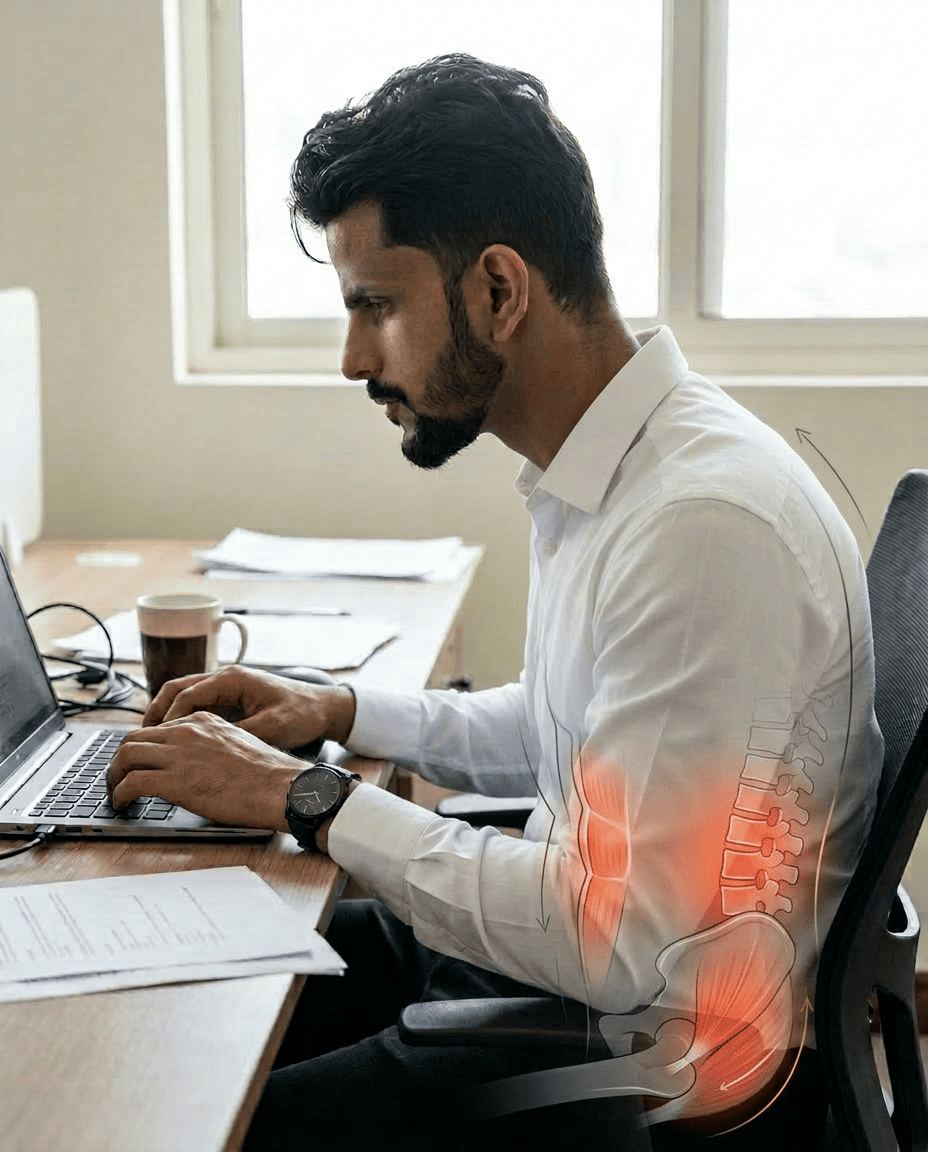
The core and glute muscles help support posture and spinal stability during everyday activities. Reduced strength in these muscles may place additional demands on the lower back and contribute to discomfort.
Common Symptoms of Lower Back Pain
Sitting for long periods can lead to these common lower back pain symptoms.